Software Development Lifecycle (SDLC) Explained (2026 Guide)
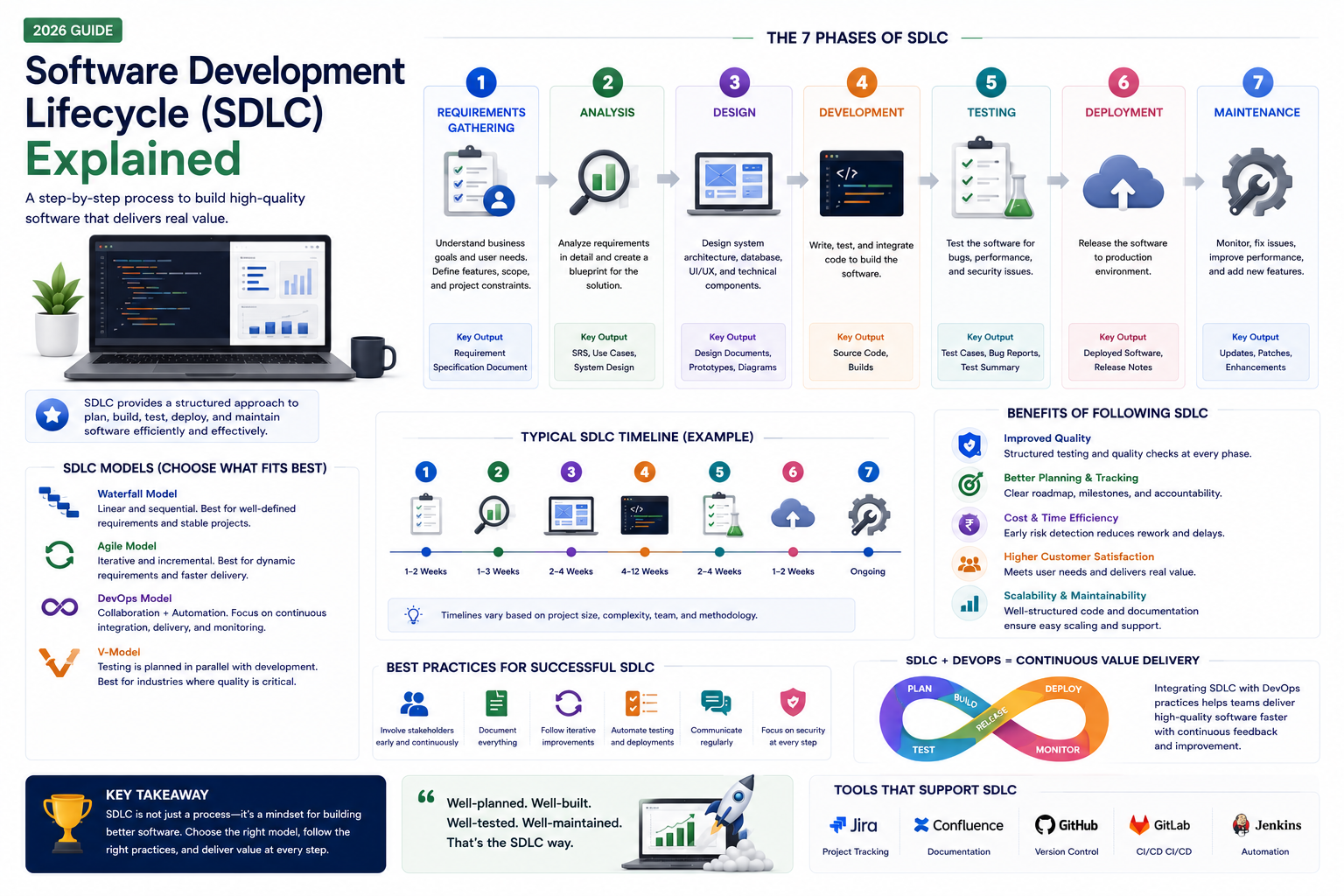

Understand the Software Development Lifecycle (SDLC) — from planning and requirements to design, development, testing, deployment, and maintenance. Complete guide for business leaders.
Software Development Lifecycle (SDLC) Explained (2026 Guide)
The Software Development Lifecycle (SDLC) is the structured process for planning, creating, testing, and deploying software. Understanding SDLC helps business leaders communicate effectively with development teams, set realistic expectations, and ensure successful project outcomes.
The Six Phases of SDLC
1. Planning and Requirements. Define what the software should do. Gather requirements from stakeholders. Conduct feasibility analysis. Create project plan with timeline and budget. This is the most critical phase — mistakes here compound throughout the project.
2. Design. Create the blueprint for the software. System architecture design. Database schema design. UI/UX design and prototyping. Technology stack selection. Good design prevents expensive rework during development.
3. Development. Write the actual code. Frontend and backend development. Database implementation. Integration with third-party services. Code reviews and documentation. Typically the longest phase.
4. Testing. Verify the software works correctly. Unit testing, integration testing, system testing. Performance and security testing. User acceptance testing. Bugs found here are far cheaper to fix than in production.
5. Deployment. Release the software to users. Infrastructure provisioning. Data migration. Environment configuration. Monitoring setup. Phased rollout to manage risk.
6. Maintenance. Ongoing support after launch. Bug fixes, security patches, performance optimization, feature enhancements based on user feedback.
SDLC Methodologies
Waterfall: Linear, sequential — complete each phase before moving to the next. Best for projects with fixed, well-understood requirements.
Agile: Iterative, incremental — work in short sprints, delivering working software frequently. Best for projects where requirements may evolve.
DevOps: Extends Agile with automated deployment pipelines, continuous integration, and close collaboration between development and operations.
Why Choose RedGobble?
At RedGobble, we build high-performance digital products for startups, businesses, and enterprises. Our expertise includes custom website development, AI solutions, AI agent development, SaaS platforms, ERP and CRM systems, mobile app development, business automation, UI/UX design, SEO-friendly websites, and cloud deployment.
Based in Greater Noida, Uttar Pradesh, India, RedGobble provides custom software development, AI solutions, mobile app development, and web development services for businesses across India and worldwide.
Frequently Asked Questions
Which SDLC methodology is best?
Agile is best for most projects because it accommodates changing requirements and delivers value incrementally. Waterfall suits projects with fixed, well-understood specifications.
How long does each SDLC phase take?
Planning: 1-3 weeks. Design: 1-4 weeks. Development: 4-30+ weeks (varies most). Testing: 1-4 weeks. Deployment: 3-7 days.
What happens if we skip testing?
Skipping testing saves time in the short term but costs far more when bugs reach production — lost customers, damaged reputation, and expensive emergency fixes.
Can phases overlap?
Yes. In Agile, design, development, and testing happen concurrently within each sprint. Modern SDLC is flexible, not rigid.
Conclusion
Understanding SDLC helps you collaborate effectively with development teams and set realistic expectations. The right methodology depends on your project, but the principles of planning, designing, building, testing, and iterating are universal.
Ready to start your project? [Book a Free Consultation](/contact) with the RedGobble team today.